Description
Description
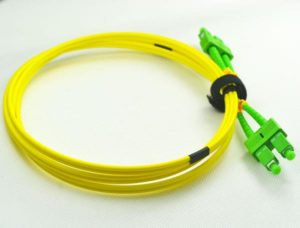
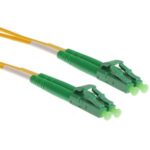
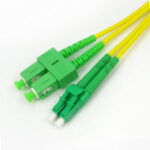
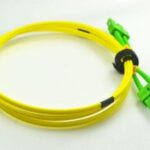
This premium OS2 single-mode SC/APC to SC/APC duplex patch lead is engineered for superior performance in telecommunications, Fibre-to-the-Home (FTTH), and other high-bandwidth applications where minimal back-reflection is critical. This high-quality patch cord ensures a reliable, low-loss connection between optical equipment, making it an ideal solution for connecting NBN equipment, network distribution, and CATV systems.
Key features
OS2 single-mode fibre: The high-quality 9/125µm single-mode fibre is designed for high-speed, long-distance data transmission with exceptional signal integrity.
SC/APC connectors: Both ends are terminated with SC connectors featuring an Angled Physical Contact (APC) polish. The 8° angle on the polished ferrule minimises back-reflection, ensuring a high return loss and a stable, high-quality signal.
Duplex design: The two-strand configuration supports simultaneous two-way data flow, making it perfect for connecting transceivers, switches, and other networking equipment.
High performance: Each cable is individually tested to ensure it meets stringent performance standards, with low insertion loss and high return loss, guaranteeing superior signal integrity.
Durable construction: The cable is constructed with a robust jacket, often Low Smoke Zero Halogen (LSZH), for enhanced safety in indoor environments. A durable 3mm jacket provides protection and flexibility.
Green colour coding: The connectors and protective boots are typically green, the industry-standard colour for SC/APC, ensuring easy identification and management.
Factory-tested and certified: Every patch lead is supplied with an individual test report, verifying its performance and quality assurance.
Typical applications
FTTH and NBN networks: For reliable connections between external fibre boxes and internal network termination devices.
CATV and analogue systems: The high return loss of the APC connectors is ideal for analogue applications where signal reflection is a concern.
Telecommunications backbones: In central offices, cabinets, and remote nodes where signal quality is paramount.
Data centres: For patching equipment where single-mode fibre is deployed for long-distance connectivity.